From Certificate to Ingredient Approval: Combining Supplier Evidence
Sep 20, 2026
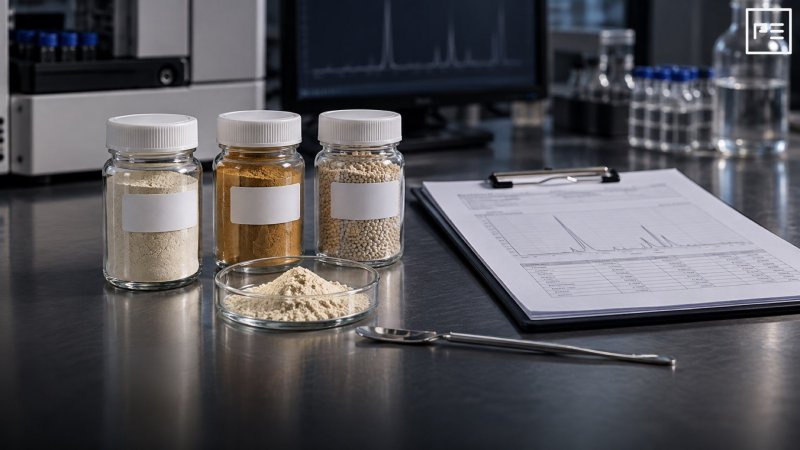
Certificates document an object of assessment within a defined scope. Approval of a new food ingredient additionally requires an unambiguous specification, batch data and evidence that the material can be controlled in the intended product and process.
Executive summary: Four levels of evidence must align. The certificate identifies the rules, assessed site and scope, the specification defines the agreed target, batch data describe the delivery, and application data demonstrate suitability for the formulation and process. Robust approval identifies the material, site, specification version, target market and use. Outstanding issues are resolved or managed through technically justified controls before commercial use.
A certificate has a defined scope
The Food Essentials article “Innovative Ingredient or Novel Food?” addresses the status and permitted uses of new ingredients.[1] Once that regulatory route is established, a separate question remains: can the selected manufacturer consistently supply the assessed material under controlled conditions? Supplier qualification connects the ingredient identity assessed for regulatory purposes with the actual manufacturing and supply route.
“GMP-certified” cannot be assessed without identifying the underlying rules and scope. The EMA describes EU GMP for medicines and their active substances; official GMP certificates and non-compliance statements can be researched through EudraGMDP.[2] Such a certificate relates to the pharmaceutical activities recorded for the inspected site. For a material offered as a food ingredient, the manufacturing steps and products covered must be established separately, together with the applicable food-law requirements.
Manufacturing, purification, drying and filling may take place at different sites within one company. Assessment depends on which stages are actually covered. The supplier's trading name alone does not establish that link. Outsourced steps therefore belong in the description of the assessed supply route.
For an FSSC 22000 certificate, the public register can be used to verify certificate status, site and scope.[3] The scope must cover an activity and product category to which the ingredient offered can reasonably be assigned. Establishing whether the particular commercial product is covered may require further documentation. Conformity of a specific batch and suitability for the intended formulation are assessed through other levels of evidence.
Combining certificate scope, specifications and application data
Throughout the EU, Article 17 of the General Food Law Regulation requires food business operators to meet and verify the requirements relevant to their activities.[4] The Food Hygiene Regulation requires HACCP-based procedures after primary production. Its rule on accepting ingredients explicitly considers whether expected contamination would make the final product unfit for human consumption even after normal processing.[5] Qualification therefore depends on the customer's processing route.
The Commission's food safety management guidance develops supplier selection through agreed specifications, hygiene assurance, possible audits and incoming delivery checks. It also considers information reliability and consistency of deliveries.[6] This is official implementation guidance; it creates no general obligation to hold a particular private certificate.
In Food Essentials' assessment, specifications must clearly describe the ingredient evaluated technically and regulatorily. For a standardised extract, this includes the starting material, manufacturing, basis of standardisation and carriers. Reporting one marker compound alone leaves relevant differences unresolved. A concentration expressed on a dry-matter basis may also lead to a different dosage calculation from one expressed for the material as supplied.
Acceptance limits must fit the application. Relevant residues, contaminants, allergens and microbiological hazards depend on the source and process. Approval documentation should distinguish statutory parameters from those derived from the customer's hazard analysis or technical requirements. This explains why a value is tested and which decision follows a deviation.
Practical assessment: one extract, two processes
A hypothetical case illustrates the interface: a plant extract is intended for a capsule and a heat-treated beverage; both uses have already been assessed separately for legality. The supplier certificate is identical in both projects. The microbiological assessment may nevertheless differ. Capsule manufacturing has no additional kill step. For the beverage, a validated heat treatment may be considered only for hazards demonstrably controlled under the actual process conditions; heat-stable toxins and subsequent recontamination require separate assessment.
For the beverage, solubility, precipitation and stability under the intended processing and storage conditions also need investigation. For the capsule, flowability, dosing accuracy and homogeneity may determine whether laboratory sample results transfer to production. These are application-specific development questions. A general quality certificate addresses them only where corresponding product data actually exist.
A certificate of analysis also needs reliable attribution. Product code, batch and specification version must match. The result, unit, test method and, where relevant to assessing a limit, the detection or quantification limit make the result interpretable. A statement of “compliance” otherwise leaves the assessment criteria unclear. Independent verification should reflect the hazards, data transparency and experience with successive deliveries.
Approval requires a defined framework for changes
The General Food Law Regulation requires systems to identify suppliers and downstream business customers.[4] For workable ingredient approval, Food Essentials additionally recommends internally linking the supplied batch, quantity used and finished-product batch. This helps delimit the impact of a subsequent finding.
Suppliers should be able to communicate changes to sources, manufacturing sites, purification, carriers or test methods in good time. The customer's reassessment follows their potential impact. Article 5 of the Food Hygiene Regulation requires HACCP procedures to be reviewed and adjusted as necessary when products, processes or process steps change.[5] Contractual communication arrangements make that review operationally manageable.
Switzerland requires a separate market assessment. The Federal Food Safety and Veterinary Office explicitly states that importers must ensure compliance through self-control even for foods from the EU.[7] Documented approval should therefore identify the markets it covers.
The outcome is a bounded, traceable decision on the ingredient and supply route. Its specification, evidence, outstanding restrictions and change arrangements also provide the link to the product dossier. There they are combined with the formulation, process and labelling into a consistent approval record.
Your ingredient project: Food Essentials supports supplier evidence assessment and alignment of specifications, applications and approval scope.
Yours, Andreas Gebhart
Sources
Checked on 18 September 2026.
[1] Food Essentials: Innovative Ingredient or Novel Food?, 13 September 2026 (German).
[2] EMA: Good manufacturing practice.
[3] FSSC: Public Register.
[4] Regulation (EC) 178/2002, Articles 17–18.
[5] Regulation (EC) 852/2004, Article 5, Annex II Chapter IX point 1.
[6] European Commission: 2022/C 355/01, Annex I section 3.4.
[7] Swiss Federal Food Safety and Veterinary Office: Importing food from the EU (German).
Note: These updates provide technical context and do not replace legal, technological or product-specific assessment of an individual case. Image: AI-generated.
Ready for sustainable solutions?