Food Supplements in 2026: Where the Next Growth Markets Are Emerging
Sep 6, 2026
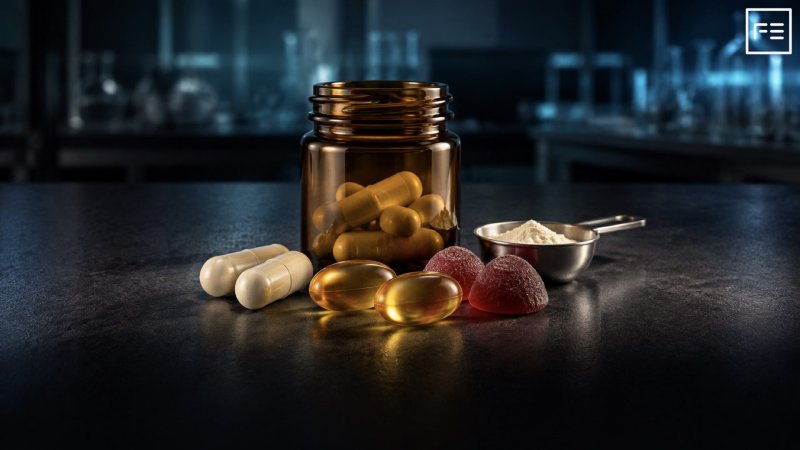
Healthy ageing, women’s health, the microbiome and nutrition during GLP-1 treatment are changing the food supplement market. Viable innovation emerges where a specific need meets robust evidence and a formulation that works in everyday life. For manufacturers, commercial success increasingly depends on the quality of this connection.
The food supplement market is broadening: new customer groups, specialised ingredients and additional purchasing channels are opening up business opportunities. At the same time, suppliers compete for attention, trust and a lasting place in consumers’ daily routines. Four trends currently appear particularly relevant, although their scientific and commercial maturity differs considerably.
The Market Is Growing – and the Way It Is Measured Is Changing Too
The analysis published in June 2026 by the Food Supplements Working Group of the German Food Federation reports approximately €4.3 billion in sales and 415 million packs. The reporting period runs from September 2024 to September 2025. For the first time, the study combines retail and household panels to capture additional online and direct-sales channels. Comparing these figures with the 241 million packs in the earlier analysis for 2022 would conflate market growth with expanded measurement.[1]
IQVIA provides a separate assessment of growth in the broader German VMHS market, covering vitamins, minerals, herbal preparations and supplements, including corresponding medicinal products. Across pharmacies, including mail order, drugstores and supermarkets, sales value rose by 9.9 per cent and pack sales by 7.6 per cent in the moving annual total to February 2025. Volume growth is therefore evident too; the difference reflects price changes and shifts in the product mix. Pack numbers measure neither the quantity of active ingredients nor days of consumption. This market definition is not identical to the Federation’s food supplement analysis.[2]
Within the narrower food supplement market, the Federation’s analysis attributes 45 per cent of packs to drugstores. Physical pharmacies, drugstores, grocery retailers, organic shops and health food stores together account for 77.5 per cent of volume but 47.6 per cent of sales value. Online and mail-order channels represent 22.5 per cent of volume. Vitamins and minerals remain the commercial foundation, accounting for around 48 per cent of sales value.[1]
Manufacturer brands and private labels now also occupy specialised benefit segments. On 5 September 2026, dm is promoting Mivolis GehirnFit with DHA and choline and a vegan collagen-support powder made from amino acids and micronutrients as new products.[3] The reviewed public data do not support a reliably defined split between branded and private-label food supplements. A directly comparable total-market series is also unavailable for Austria and Switzerland.
Austria’s SafeNEM study reveals an informative marketing pattern: in nine qualitative industry interviews conducted in 2025, companies’ own webshops, social media, search advertising and newsletters play a central role, alongside pharmacies and platforms. Interviewees describe high advertising costs as a barrier to market entry.[4] This creates a commercial trade-off: an easily copied product requires a continuous supply of new reach, while a scientifically differentiated offering initially incurs higher development costs.
Healthy Ageing Becomes a Question of Muscle Function
Healthy ageing has particular substance where it concerns the preservation of specific abilities. Muscle strength connects the needs of older people with the established sports nutrition market. Creatine is a well-supported example: the EU claim for adults over 55 concerns an increase in the effect of resistance training on muscle strength. The conditions specify three grams of creatine daily and progressive resistance training at least three times a week over several weeks, at the stated intensity of 65–75 per cent of one-repetition maximum.[5]
Commercial expansion is already evident. Since October 2025, Ehrmann has marketed high-protein creatine products using Alzchem’s Creavitalis, including puddings, drinks and bars.[6] These general food products are not part of the food supplement market; they show how established supplement ingredients can create new consumption occasions. Supplement suppliers consequently face increasing competition for the same daily routine. Powders, capsules and gummies must be judged by the achievable daily intake, convenience and cost per use.
Extending such functional benefits to increased lifespan is less well supported. In June 2026, IQVIA describes the German NAD+ booster market as a small growth segment while noting the lack of long-term human health findings.[7] From a product development perspective, more viable positioning currently centres on defined functions and target groups. A change in a laboratory marker alone does not establish a meaningful everyday benefit.
Women’s Health Requires More Precise Target Groups and Studies
Women’s health is developing into a more differentiated product strategy: menstrual symptoms, the transition to menopause and later life create different expectations. A universal ‘balance’ formulation is unlikely to reflect these differences scientifically. The connection with microbial ingredients is particularly interesting, as new research approaches meet technically versatile ingredients.
On 25 February 2025, ADM announced an exclusive distribution agreement with Asahi for heat-inactivated Lactobacillus gasseri CP2305. The supplier describes the ingredient as suitable for demanding formulations, including gummies.[8] An Asahi-funded randomised study published in 2022 analysed data from 80 premenopausal Japanese women aged 40–60 over six menstrual cycles. Post hoc exclusions from the analysis further limit the strength of the findings. Several symptom scales improved compared with placebo. However, the difference in the proportion of women whose overall symptom score improved did not reach statistical significance.[9]
This is a development signal with a clearly defined scope: the study examined mild symptoms, a specific strain and a defined preparation. A single study does not support comprehensive menopause claims. The authorised vitamin B6 claim concerning the regulation of hormonal activity also describes a limited nutritional contribution; it does not demonstrate comprehensive treatment of menopausal symptoms.[5] For European projects, the regulatory compliance of the specific microbial ingredient and the permitted communication remain separate development tasks.
The Microbiome: Benefits Become Measurable at Strain Level
Gut health is expanding towards metabolic health. A randomised study involving 90 adults, published in Nature Medicine on 13 May 2026, investigated pasteurised Akkermansia muciniphila MucT following an eight-week low-calorie diet that achieved at least eight per cent weight loss. During the subsequent 24-week maintenance phase, average weight regain was 1.2 kilograms with supplementation and 3.2 kilograms with placebo.[10]
The result concerns weight maintenance after dieting. It cannot be extrapolated to arbitrary bacterial mixtures or to support during GLP-1 treatment. The limited duration and commercial and patent interests within the author group point to the need for independent confirmation before a broad benefit claim is developed.[10]
Regulatory access is evolving in parallel. Regulation (EU) 2026/391 of 23 February 2026 amended the conditions of use and labelling requirements for pasteurised Akkermansia. For adults, the maximum amount remains 3.4 × 10¹⁰ cells daily; pregnant and breastfeeding women are excluded. Protection of the authorisation data runs until 1 March 2027. During that period, market access is generally tied to the authorisation holder or its consent, although further authorisations supported by independent evidence remain possible.[11] Access to the ingredient is therefore commercially as relevant as the research evidence.
Technically, the inactivated form offers a different development route from live cultures. Strain identity, the fermentation and inactivation processes, cell quantification and conformity with the authorised specification must be controlled. The term ‘postbiotic’ does not replace this ingredient description. Competition is consequently shifting towards reproducible ingredients with documented benefit profiles. At scale-up, process yield and retention of the relevant properties need to be aligned. A cheaper inactivation or drying process may affect whether the studied ingredient profile remains applicable. Process changes, analytical methods and robust supplier specifications therefore become part of the business model.
GLP-1 Creates a Need for Nutritional Support
Drug-assisted weight loss opens up another application area. When appetite is markedly reduced, obtaining enough protein and micronutrients becomes more difficult. A joint advisory statement issued by four medical and nutrition societies in 2025 therefore highlights nutrient-dense diets, supplementation according to need and resistance training. It is professional guidance, not evidence of efficacy for commercial products marketed to support GLP-1 treatment.[12]
For manufacturers, this creates a specific development brief: small portions, high nutrient density, good tolerability and a useful complement to the person’s actual diet. General multi-ingredient products address these needs only to a limited extent. Protein intake and possible micronutrient deficiencies must each be considered separately. Personalisation is most plausible here as needs-based selection and support. A questionnaire alone does not clinically validate an individual mixture of active ingredients. Offerings that combine advice and follow-up monitoring with manageable, reproducible formulations are commercially interesting. However, the additional support must be justified by pricing and long-term customer retention.
Nestlé presented an internationally relevant process example on 15 April 2025: whey protein microgels are intended to enable concentrated, shelf-stable protein drinks without the thickening that normally causes difficulties during heating. The first product, Boost Pre-Meal Hunger Support, was introduced at the time as a US shop trial.[13] For Germany, Austria and Switzerland, its relevance lies in formulation technology and compact drink formats. This does not establish a launch in those markets or authorisation of an EU health claim. Nor does nutritionally induced GLP-1 secretion imply an effect comparable with that of a medicinal product.
Across all four trends, product format becomes a commercial factor. An appealing gummy loses its advantage if the required daily portion becomes too large; a concentrated shot needs convincing sensory properties and demonstrated storage stability. The decisive connection is between an effective intake, a manufacturable formulation and an affordable monthly cost. High-quality ingredients, stability testing and clinical development make market entry more expensive. Their commercial value emerges only when buyers understand the documented difference and make repeat purchases. Even a growing overall market therefore offers no protection against poor profitability for an individual brand.
Health-related advertising continues to require its own legal basis. A positive study and a novel food authorisation serve different purposes; neither automatically permits a health claim.[14] Switzerland additionally has its own requirements, including those for composition, maximum amounts and labelling.[15] This trend analysis therefore develops the question already discussed by Food Essentials: why intended communication should be clarified before the formulation.[16] Successful supplement innovation connects this early assessment with a need that persists beyond the first advertising campaign.
Food Essentials supports the assessment, development and market launch of food supplements – from ingredients and processes to product positioning.
Wishing you a pleasant Sunday, Andreas Gebhart
Sources
Sources checked on 5 September 2026.
- AK NEM: Marktanalyse, 25.06.2026 · Methodik, 30.06.2026
- IQVIA: VMHS-Markt, MAT 02/2025 · Marktdefinition
- dm: Mivolis-Neuheiten
- KMU Forschung Austria: SafeNEM, S. 17–19, 25
- VO (EU) 432/2012, Anhang: Kreatin und Vitamin B6
- Alzchem: Q3/2025, Abschnitt 1.4
- IQVIA: NAD+-Booster, 29.06.2026
- ADM: CP2305-Vertrieb, 25.02.2025
- Sawada et al.: CP2305, Nutrients 2022
- Mount et al.: Akkermansia, Nature Medicine 2026
- VO (EU) 2026/391, Anhang · VO (EU) 2017/2470, Anhang: Akkermansia
- Mozaffarian et al.: GLP-1-Ernährung, 2025 · Berichtigte Fassung, 2026
- Nestlé: Protein-Mikrogele, 15.04.2025
- VO (EG) 1924/2006, Art. 5, 6 und 10
- BLV: Nahrungsergänzungsmittel
- Food Essentials: Kommunikation vor Rezeptur, 16.08.2026
Note: This article provides technical information and does not constitute legal advice. Image: AI-generated.
Ready for sustainable solutions?